iFirsh
The on-demand solution for requesting quotations and the purchasing of goods and services in record time. Just create a request a quotations and receive as many quotations from suppliers.
Small and medium businesses frequently need products and services but lack a single place to request quotations, compare suppliers, and make informed decisions. At the same time, suppliers struggle to reach genuine buyers, receive clear requirements, and avoid wasting time on unqualified leads.
Build a simple, reliable Botswana-first B2B RFQ platform where businesses can request quotations in minutes, compare verified local suppliers, and close deals faster, while suppliers get access to genuine buyers with clear, structured requirements.
As Designer & Developer
Responsible for end-to-end product design and development, including user experience, interface design, core feature implementation, and delivering a scalable B2B procurement platform.
Moving beyond assumptions to understand how buyers choose suppliers, where trust breaks in procurement, and why quotation flows become slow and inefficient.
Research Approach
Instead of relying only on surveys, I focused on behavior-based research.
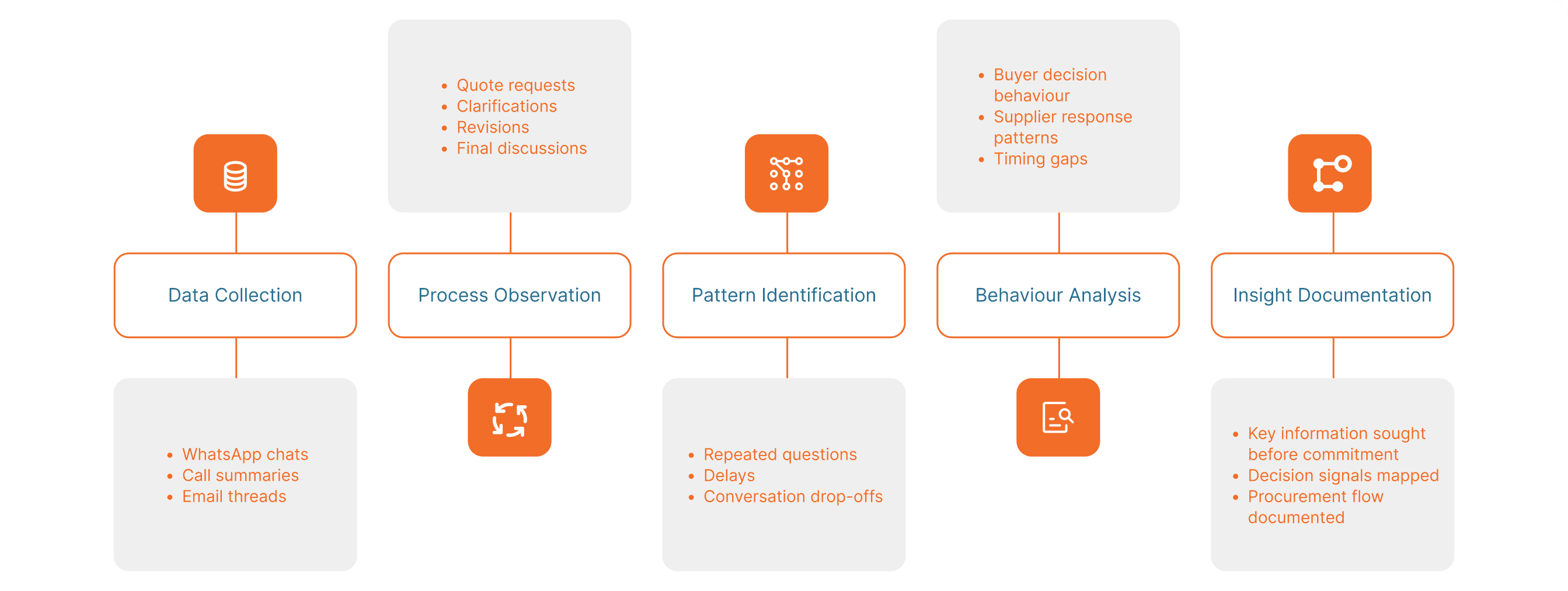
This helped me see procurement as a decision + risk process, not just price comparison.
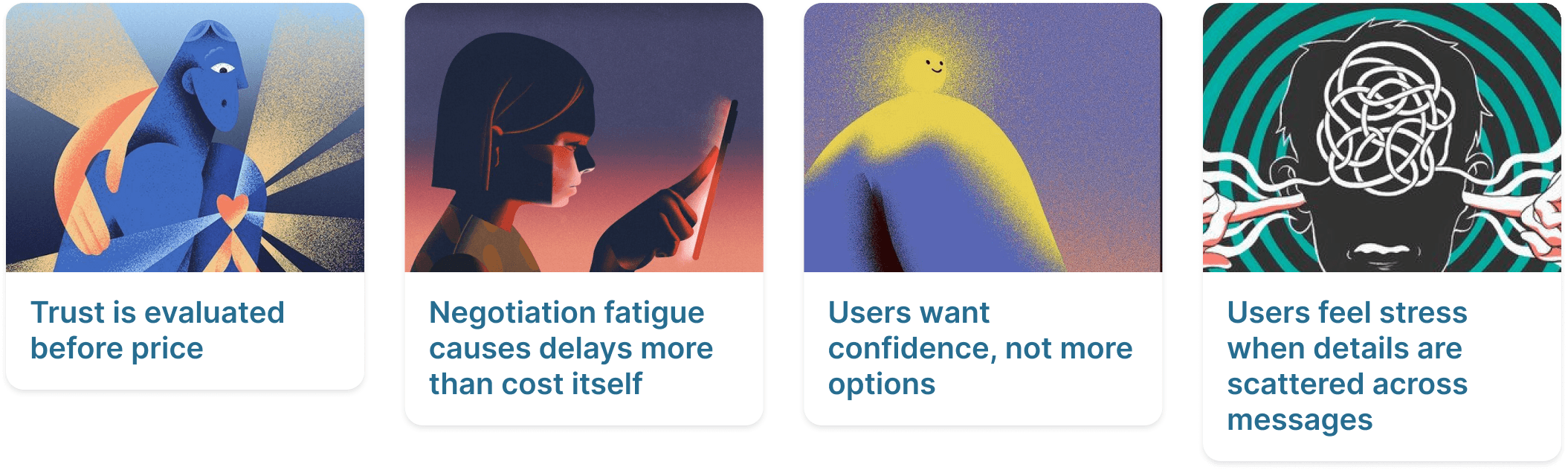
This resulted in clearer decision-making for buyers, faster and more meaningful buyer & supplier conversations, reduced back-and-forth during quotation stages, and a procurement flow aligned with real small-business behavior.
This project reinforced my approach to design as decision support, not feature delivery. By designing for trust and clarity, the product enables faster, more confident procurement decisions.
Target Users
After interviewing users, I arrived at the following conclusion: the primary users are small business owners, with local and regional suppliers as secondary users—most of whom are non-technical, mobile-first, and time-constrained.
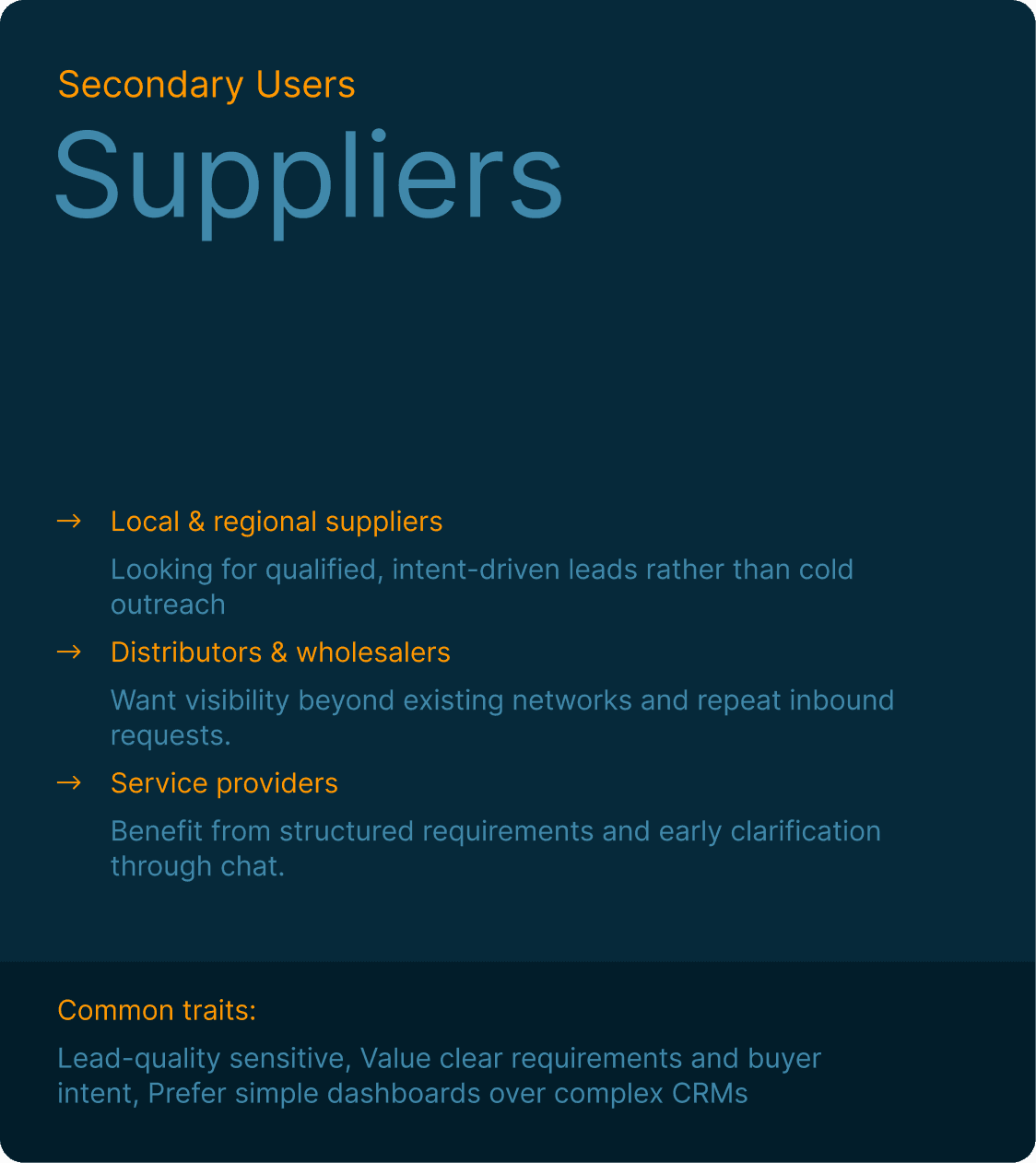
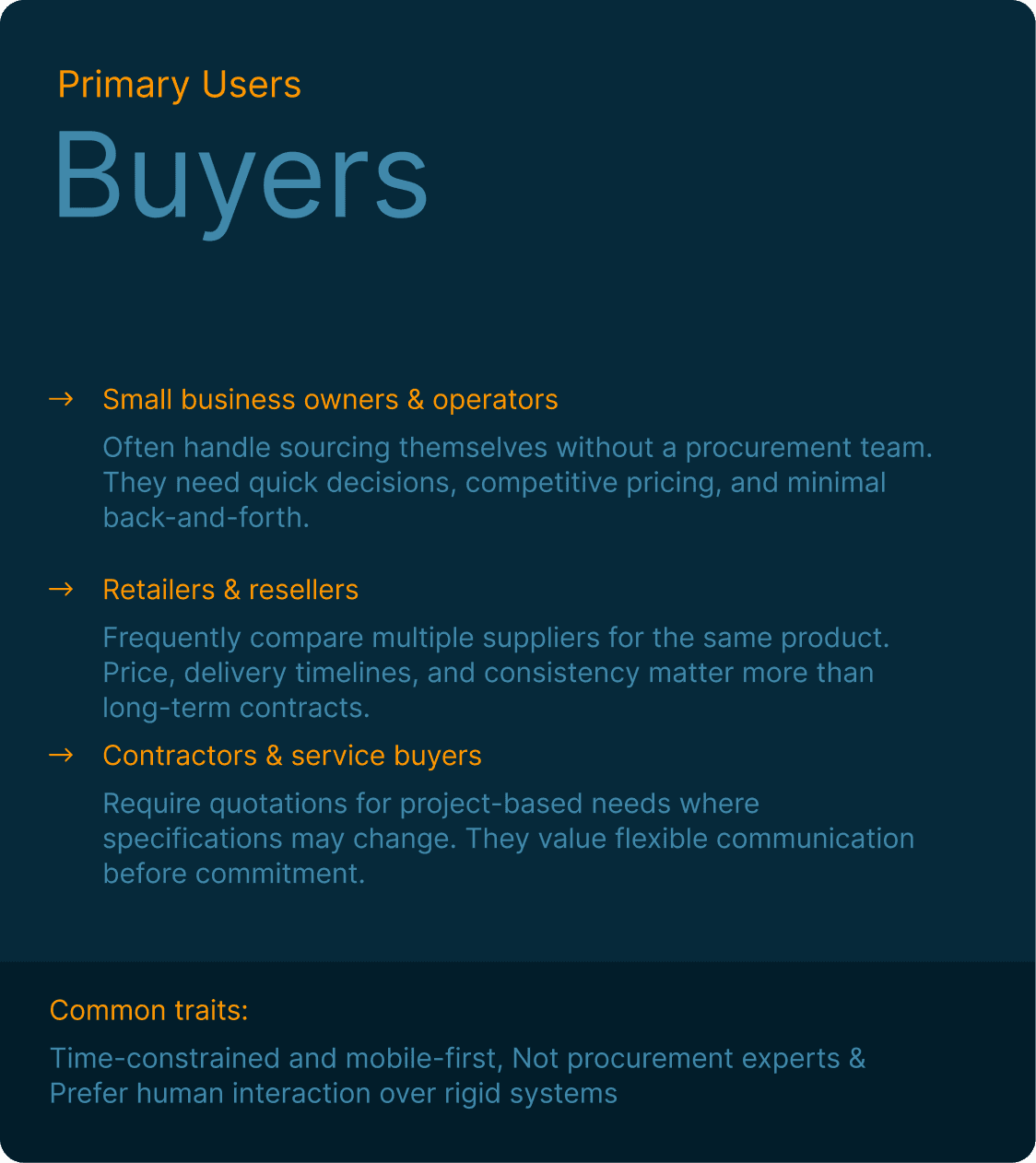
A supplier wants inbound leads without marketing spend
A buyer wants to clarify quality, delivery, and pricing before committing
These scenarios guided feature prioritization and screen flow.
If users can post their requirement once and view all received quotations in a single, structured interface, sourcing time will reduce and purchase decisions will become faster and more confident.

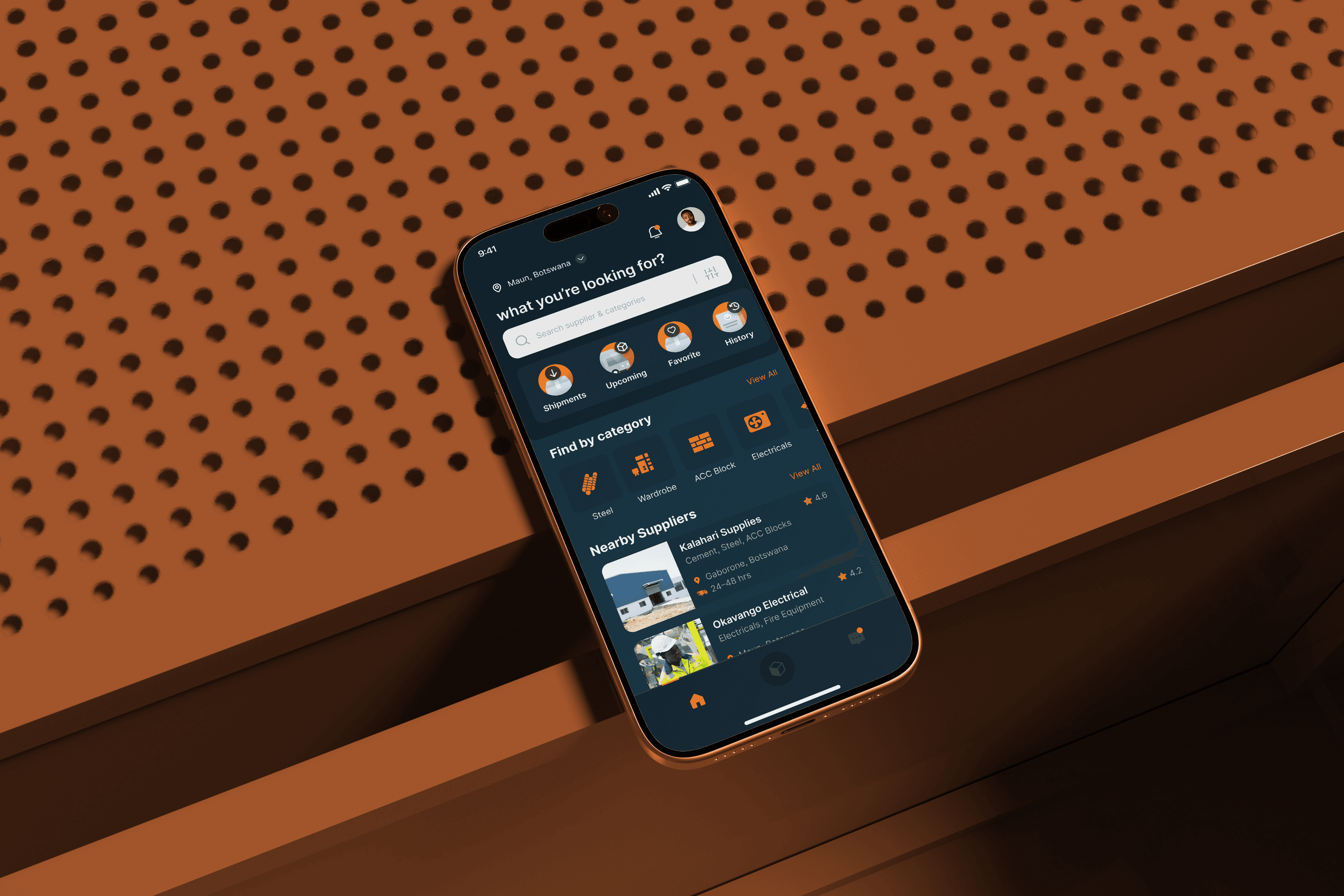
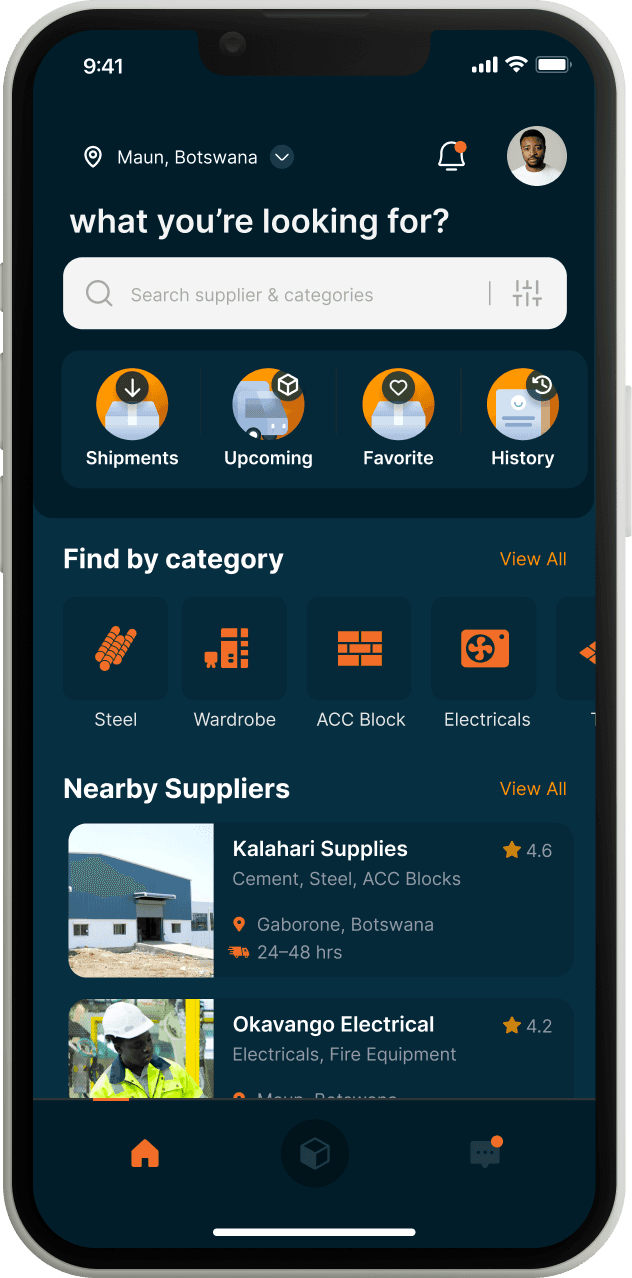
The universal search bar helps users quickly find products, services, or suppliers, quick actions reduce steps for frequent and time-sensitive requests, nearby suppliers surface relevant local options, and bottom navigation enables seamless switching between core workflows.
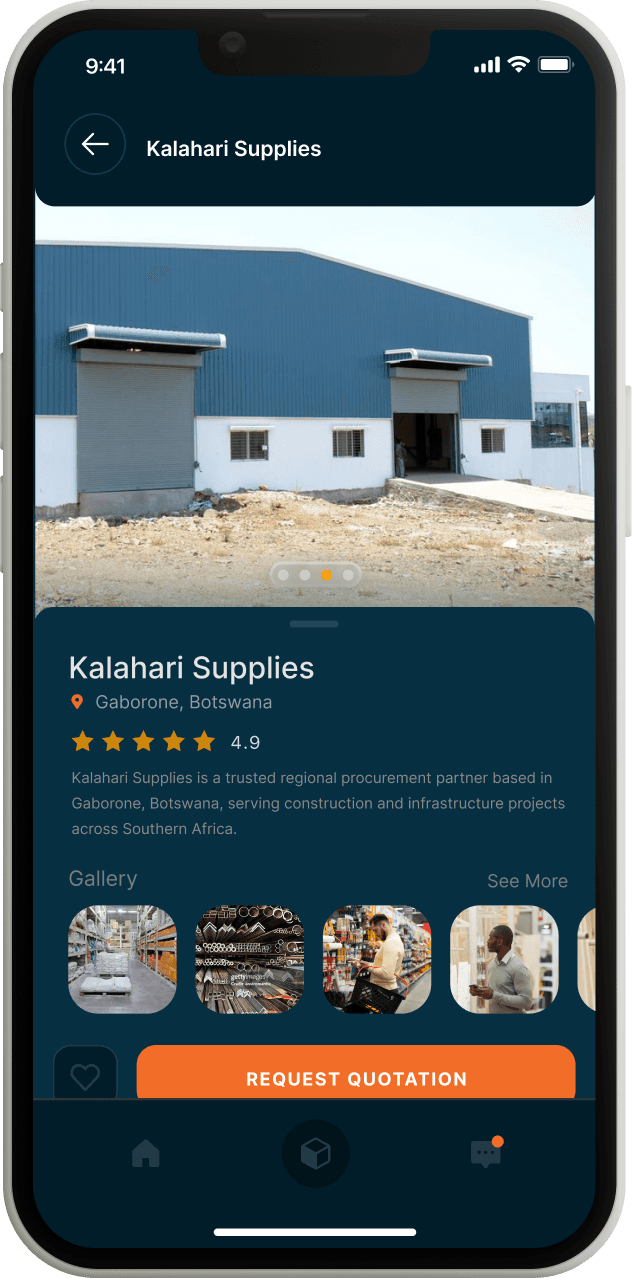
The supplier profile highlights verified photos, clear location details, and business visuals to establish credibility, while a prominent quotation button enables users to request quotes at the right moment.
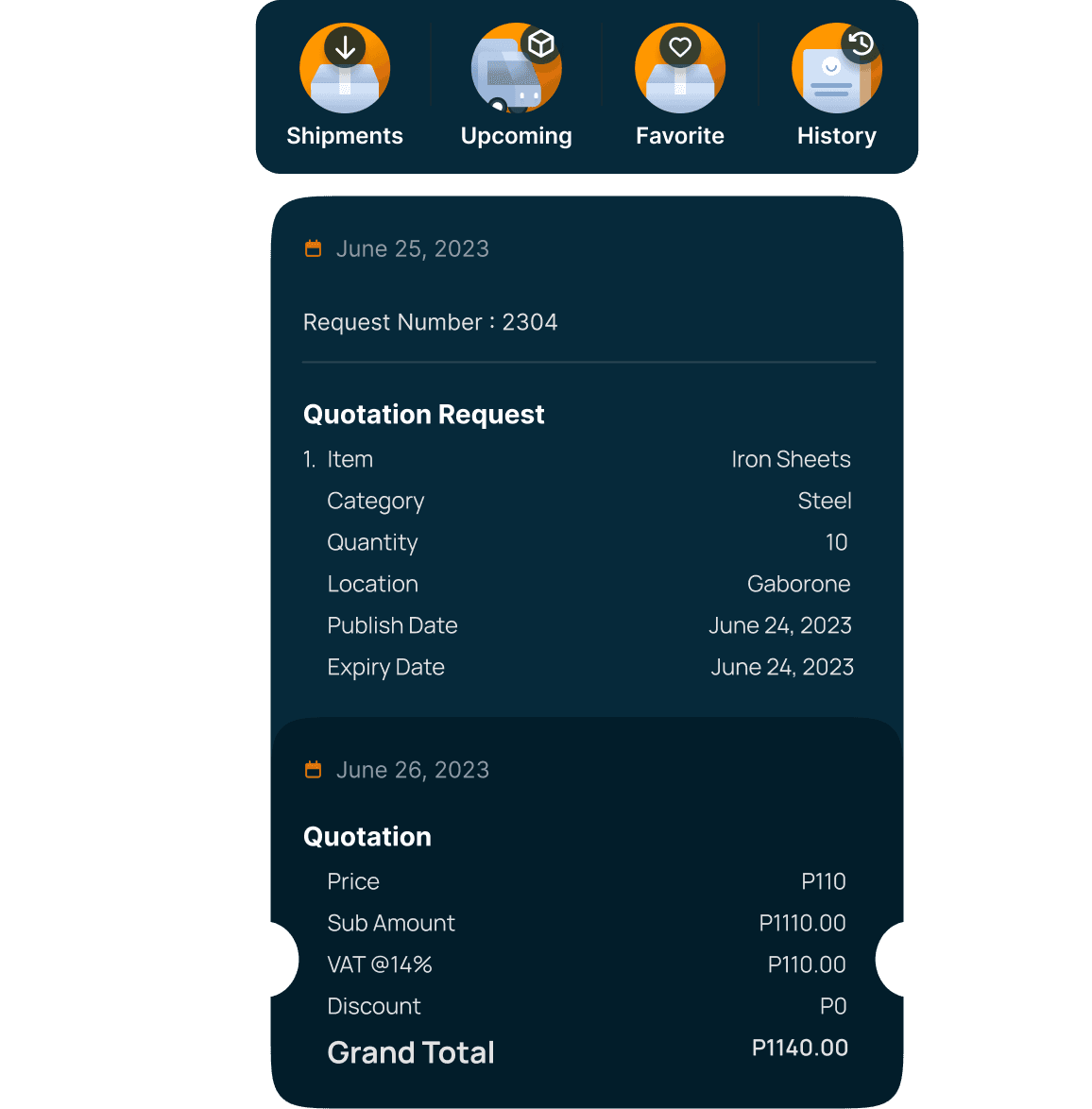
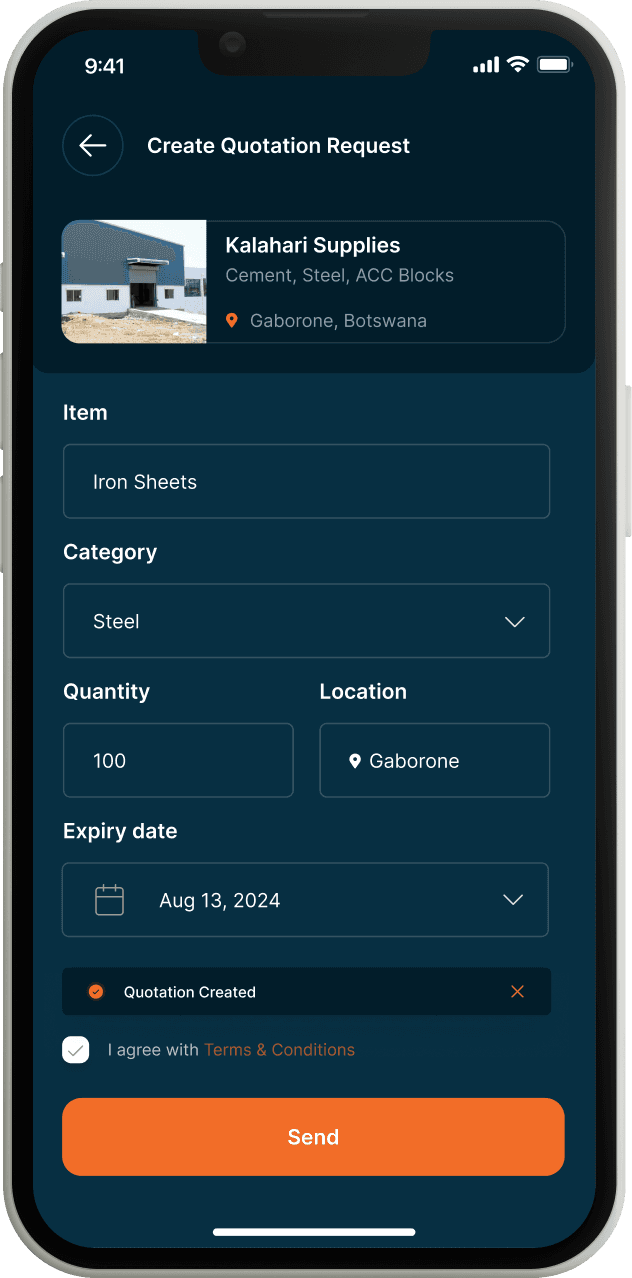
The quotation request page is intentionally short and quick to fill, capturing only essential details likd item, category, quantity, location, and expiry date, so suppliers can respond faster with accurate, comparable quotes.
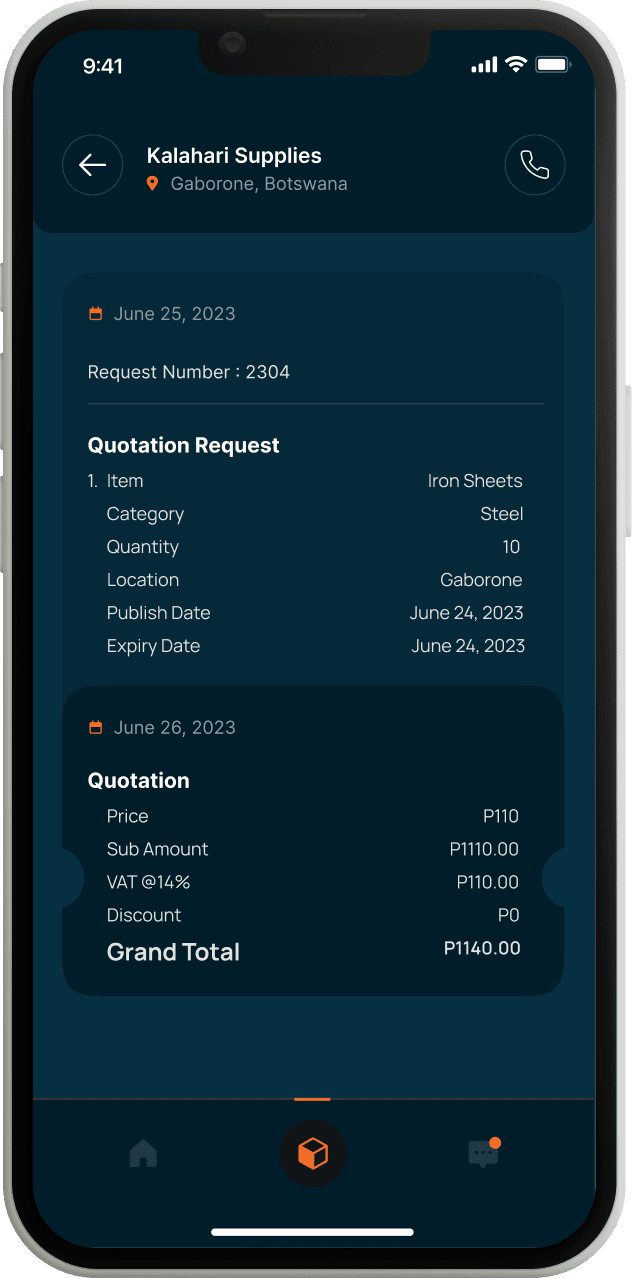
Submitted quotation details alongside seller responses in one place, helping buyers quickly review prices, terms, and updates without chasing suppliers or switching contexts.
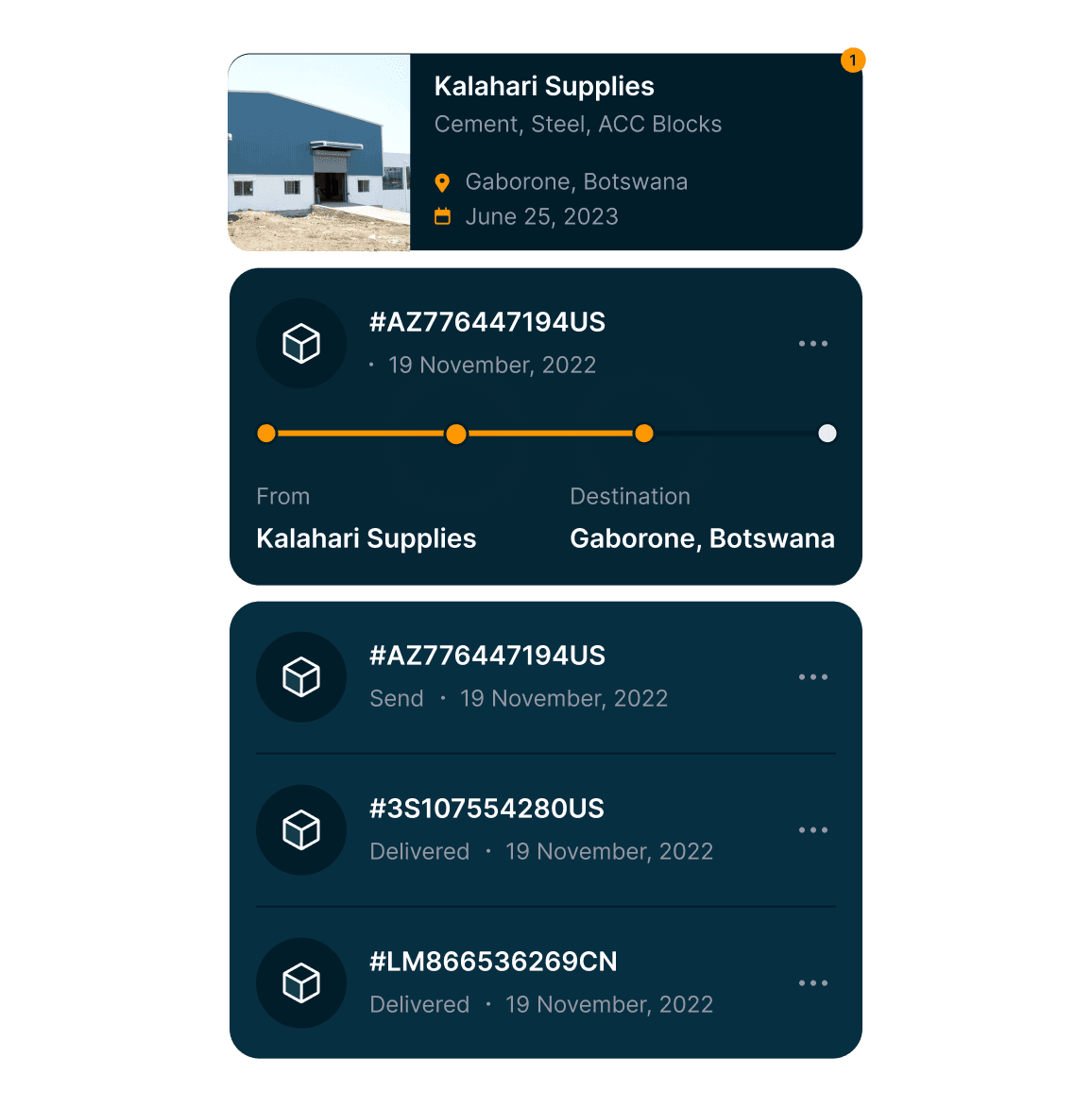
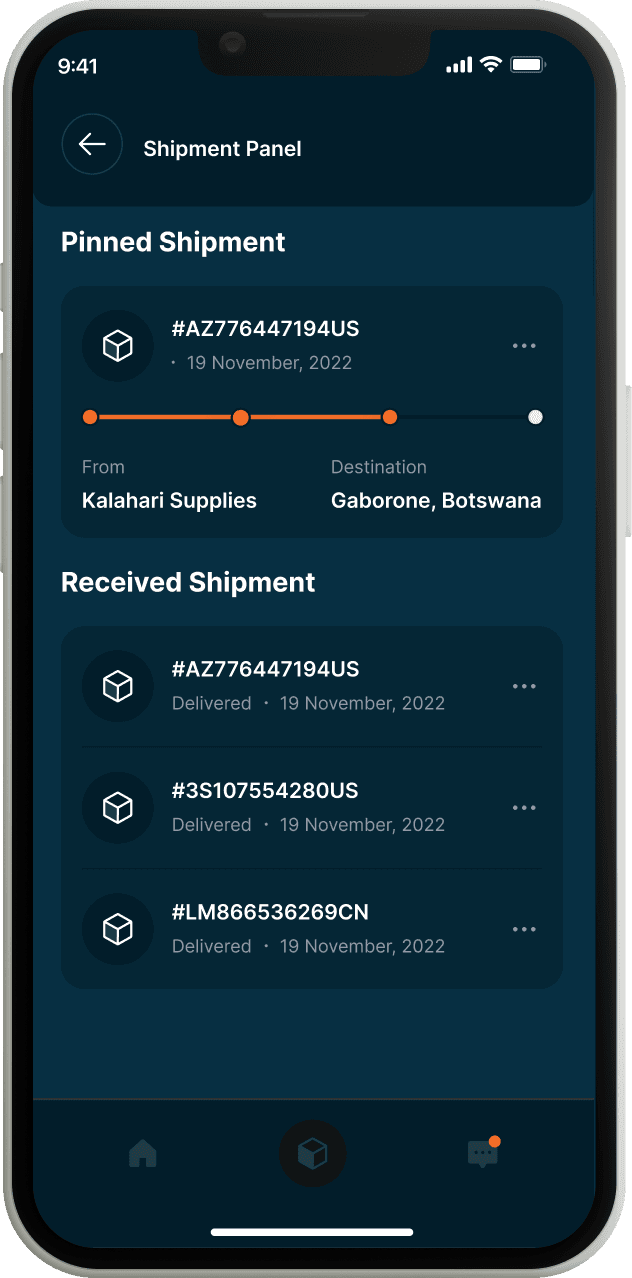
The shipment details screen highlights the currently pinned shipment for quick tracking, while providing clear delivery information and status updates so users can monitor progress and receive shipments with confidence.
I developed the iFrish app end-to-end using Flutter, with a strong product-led approach. Every technical decision was driven by real user behaviour, usability insights, and the need for speed and clarity in the core experience.
Flutter’s single codebase enabled rapid experimentation, faster feedback loops, and consistent performance across platforms. I focused on building reusable components, scalable architecture, and smooth interactions, allowing the product to evolve quickly without compromising stability.
The development journey was iterative by design: build, test, refine. Features were shaped based on actual usage patterns rather than assumptions, ensuring the product remained lightweight, intuitive, and ready to scale.
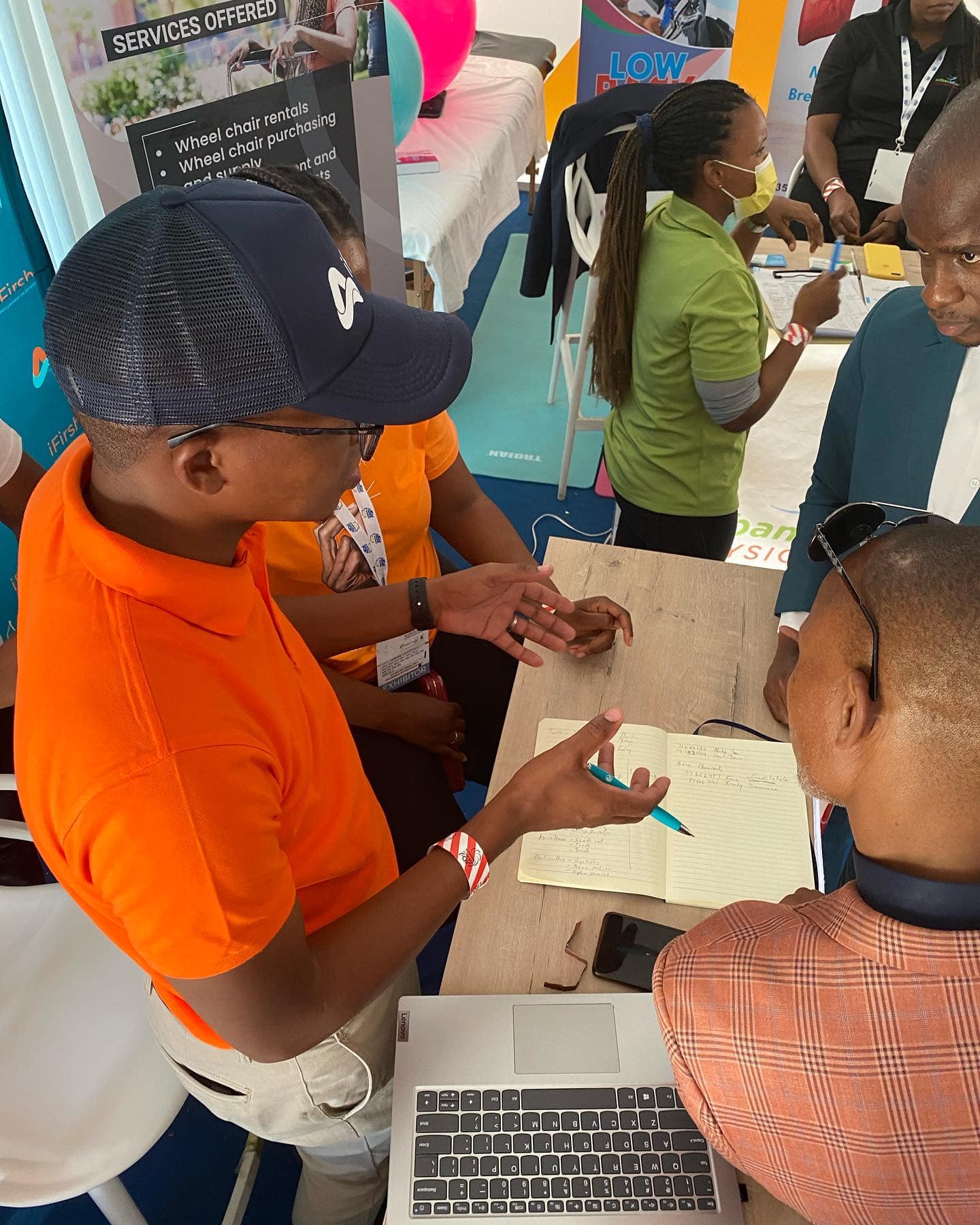
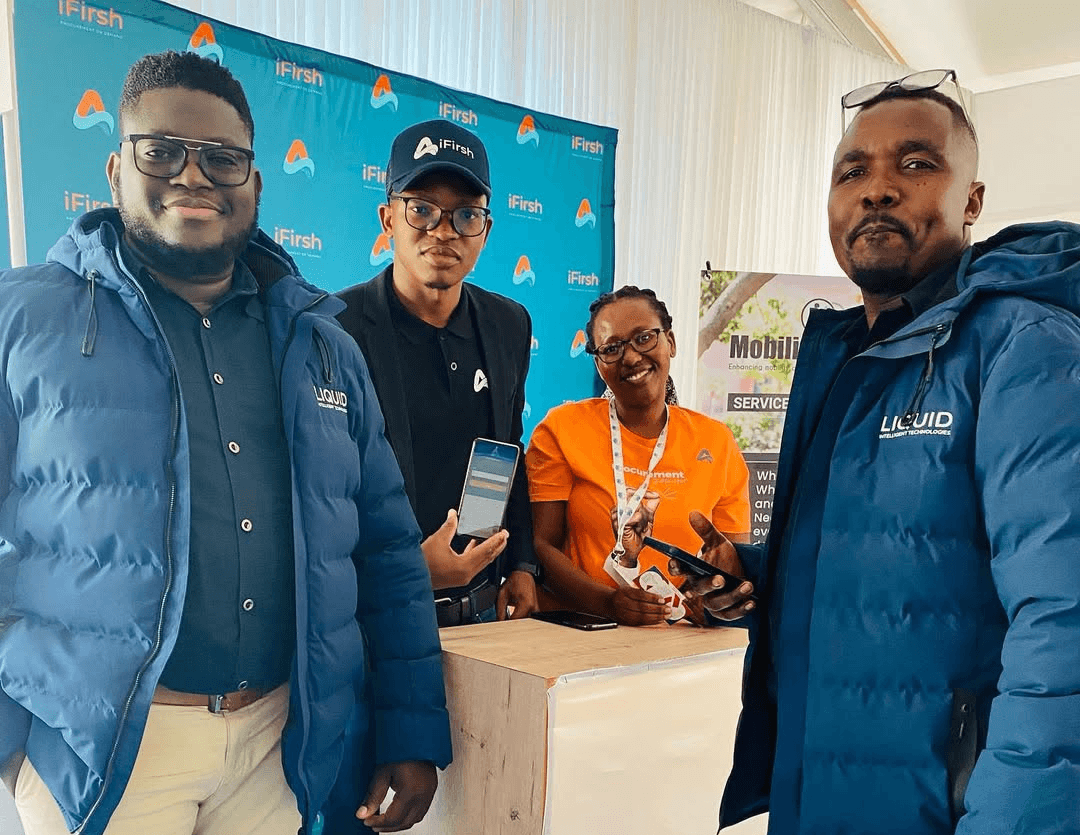
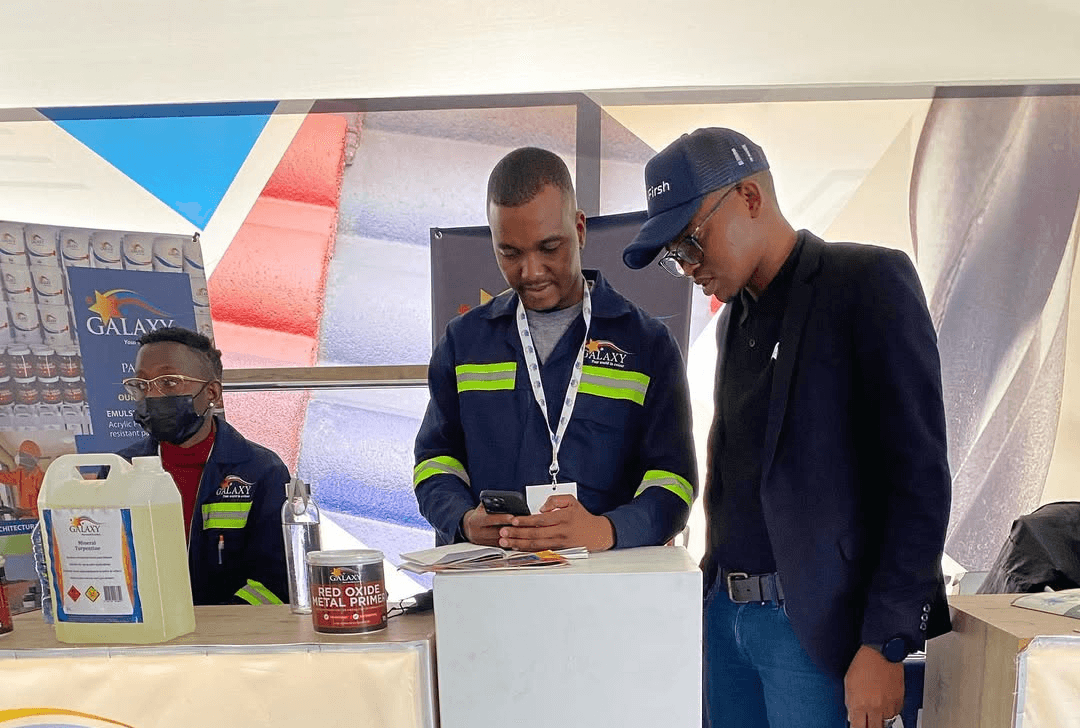
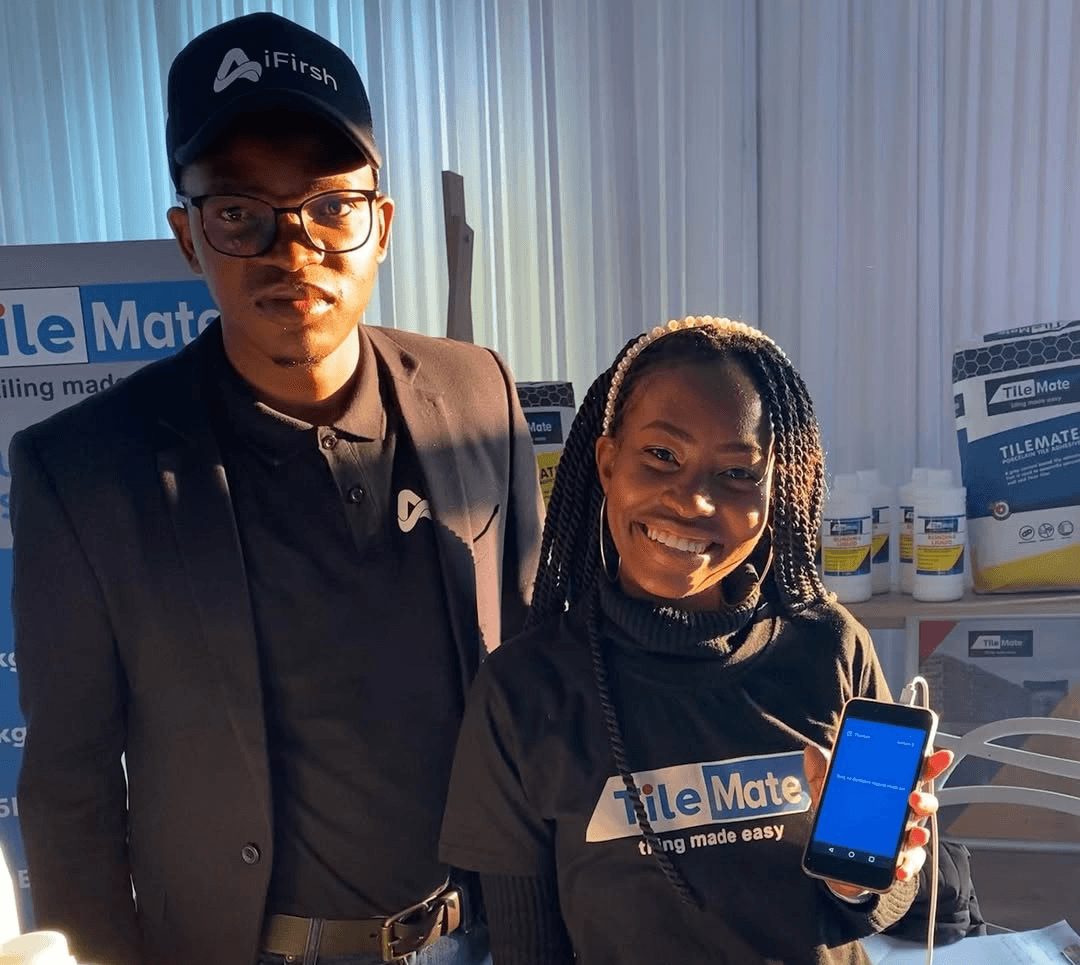
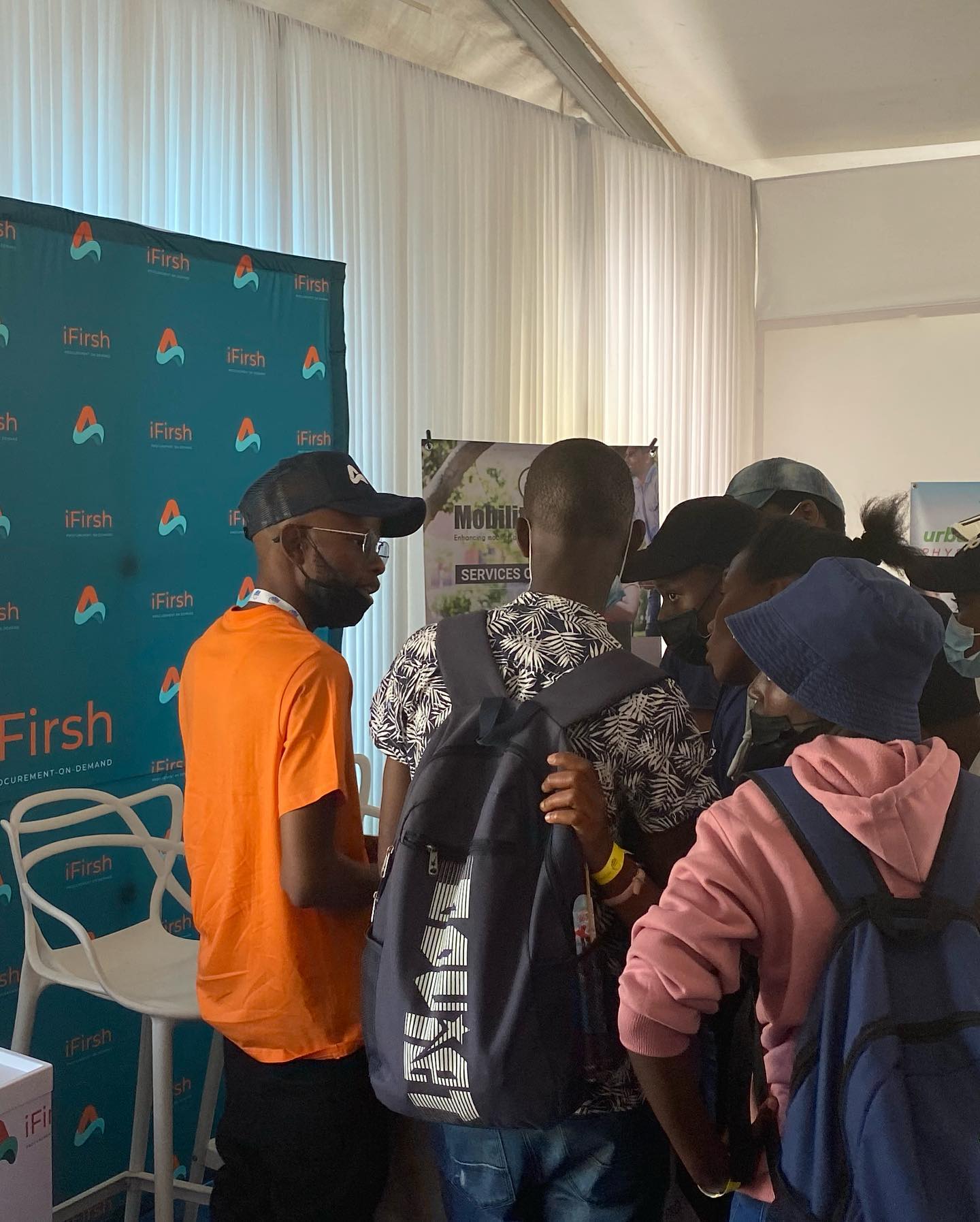
iFrish was launched across multiple business and industry expos in Botswana, allowing the product to be introduced directly to business owners, suppliers, and decision-makers. These launches helped validate the problem, observe real user reactions, and gather early feedback from the target market in live, high-intent environments.

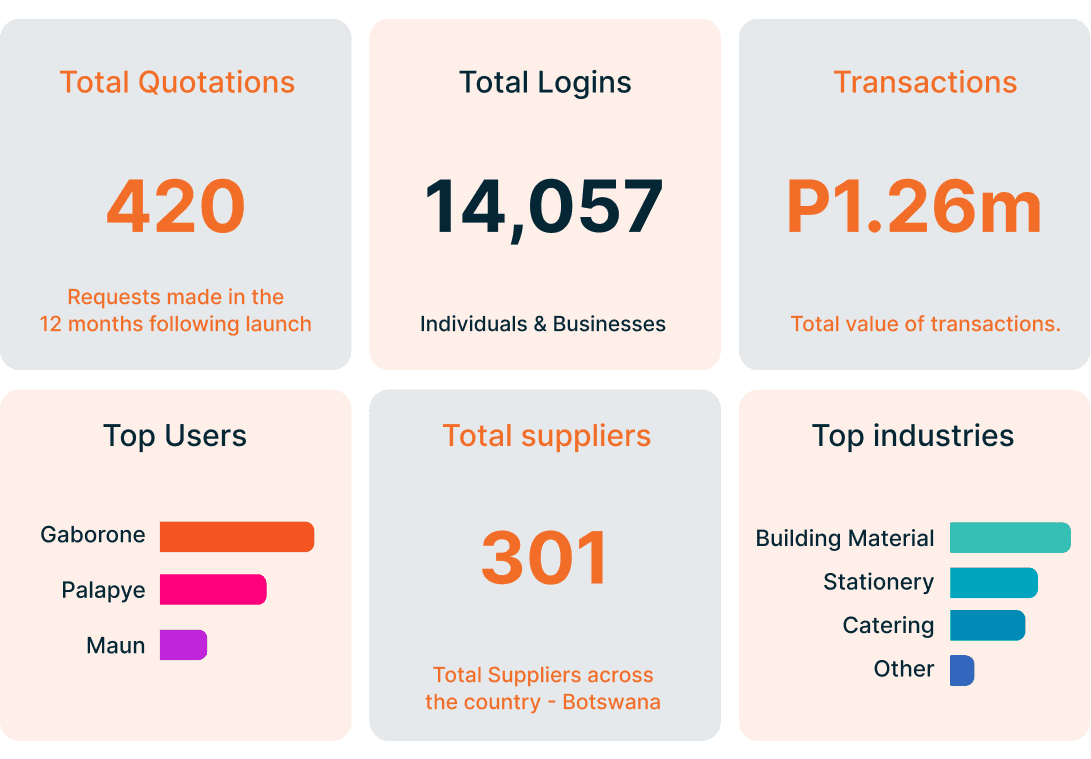
This chart summarizes key app activity recorded during the first 12 months after launch. The data reflects real usage across core features of the platform.
Building iFrish highlighted how important it is to respect existing user behaviour while gradually introducing structure. Early feedback reinforced that clarity and trust matter more than features, and that real learning comes from staying close to users and iterating patiently.
iFrish involved balancing speed with clarity in an environment where procurement habits were largely informal. Translating fragmented conversations into structured product flows, validating assumptions with limited early data, and driving adoption across varied user types were key challenges during the initial phase.
iFirsh was built to simplify real-world sourcing, not replicate enterprise procurement tools. The project strengthened my ability to own the full product lifecycle. from problem discovery to design, development, testing, and launch.